

Type: naturalistic, landscape, and cultural
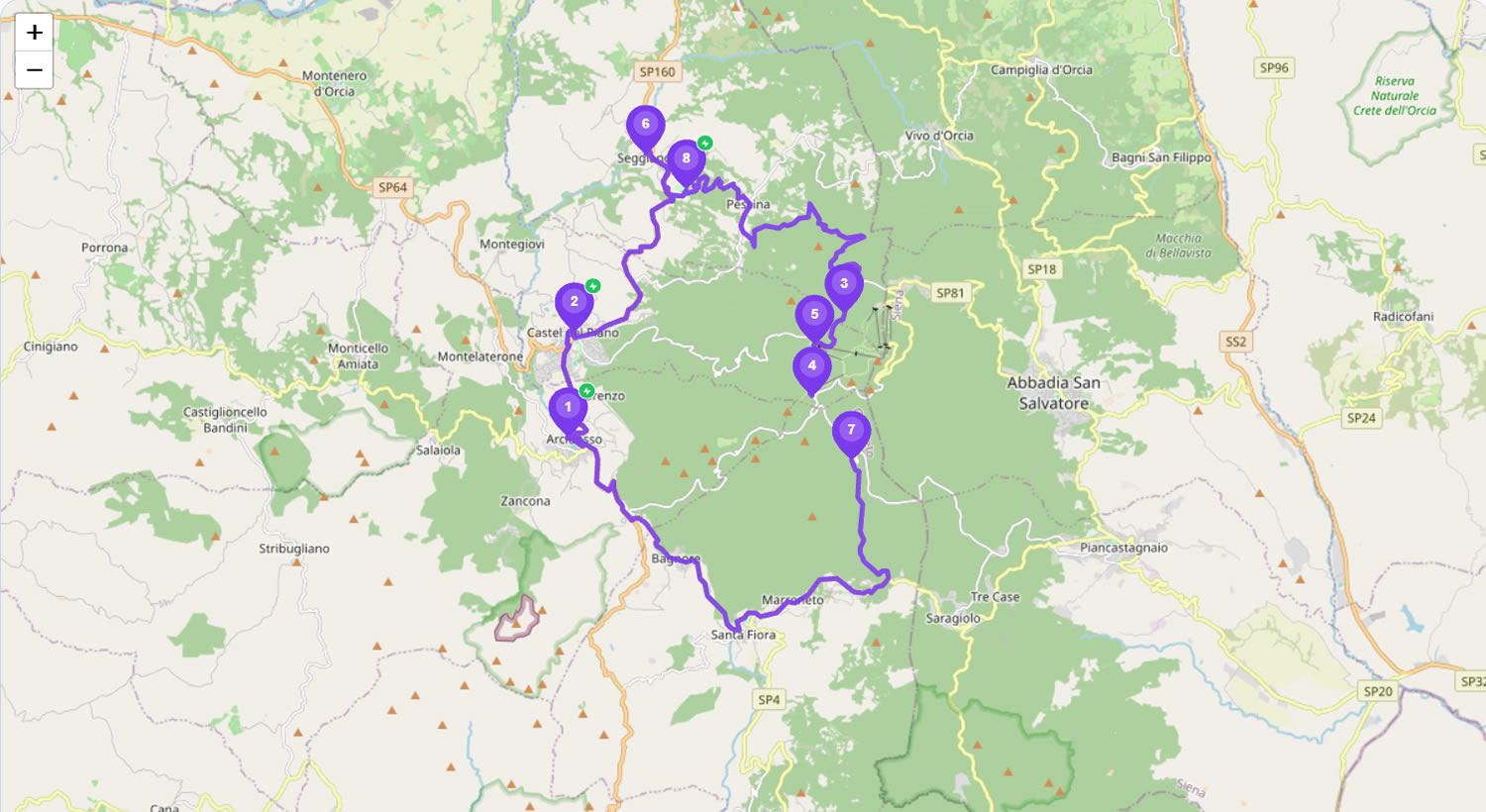
Approximate distance: 44 km
This itinerary crosses the physical and symbolic heart of Mount Amiata, connecting the mountain’s natural dimension with the human, artistic, and communal interventions that have shaped its western slope. It begins in Santa Fiora and gradually climbs toward the summit area, where the landscape changes dramatically in climate, vegetation, and perspective.
🌲 Prato delle Macinaie: the lived forest
The beautiful Prato delle Macinaie is one of the most frequented areas of Amiata for outdoor activities. Here the forest becomes a lived environment: trails, clearings, and equipped spaces reflect a contemporary use of the mountain centered on trekking, nature breaks, and slow enjoyment, in continuity with the historic vocation of the area.
⛰️ Mount Amiata Summit: walking the highest point
The route reaches the summit of Mount Amiata, one of the widest panoramic viewpoints in central Italy. By parking at Prato delle Macinaie and taking the chairlift (when operating), you can reach the top directly, experiencing the ascent as part of the journey.
When the chairlift is not operating, it is possible to drive up and park, then walk toward the Monumental Cross. In both cases, the summit offers ideal spaces for short walks, expansive views, and a clear reading of Amiata as an isolated and dominant mountain, central to the surrounding territory.
🎨 Daniel Spoerri Garden: art within the landscape
Continuing toward Seggiano, the itinerary reaches the Daniel Spoerri Garden, one of its most surprising stops. Here contemporary art interacts directly with the landscape without imposing upon it: sculptures and installations are integrated into the terrain among woods, olive groves, and slopes, creating a visit that combines walking, observation, and reflection. It offers a different, more symbolic and intuitive perspective on the relationship between people and territory.
🫒 Seggiano: among olive trees and highland silence
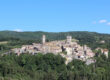
One of the most authentic villages on the western slope of Amiata, perched on a height overlooking olive groves, forests, and ridges opening toward the Maremma. The compact stone-built historic center preserves its medieval layout and an intimate atmosphere in constant dialogue with the surrounding countryside. Seggiano is especially known for the production of Olivastra Seggianese, a native olive cultivar that produces a delicate yet complex extra virgin olive oil, symbol of the area’s agricultural identity.
🏘️ Castel del Piano and Arcidosso: community and territory
Descending toward the valley, the route reaches Castel del Piano and Arcidosso, two towns that express the western slope of Amiata as a space of community, work, and territorial organization. Here the mountain translates into daily life, local markets, inhabited villages, and social relationships that remain vibrant before returning to Santa Fiora.
🏘️ Santa Fiora: return to the heart of the village
Returning to Santa Fiora closes the loop by bringing you back to the historic center, among the Peschiera, the Sforza Cesarini Palace, and stone streets that recount centuries of balance between water, power, and community. After crossing isolated parish churches, fortresses, and mountain villages, the return offers a comprehensive vision: Amiata as a coherent system, where landscape, architecture, and everyday life remain seamlessly connected.
Why choose it
An ideal itinerary for those who want to read Mount Amiata as a complex and layered landscape, where nature and human intervention have dialogued for centuries without canceling each other out. The route crosses environments of great natural value, including the vast Amiata beech forest, considered one of the largest artificial beech forests in Europe, the result of far-sighted forestry policies promoted by the Lorraine rulers between the eighteenth and nineteenth centuries.
The mountain thus reveals all its dimensions: wild yet organized, wooded yet inhabited, isolated yet central within the surrounding territorial systems. From the summit to the trails around Prato delle Macinaie, down to the villages and communities that live along its slopes, this itinerary is perfect for those seeking a balanced understanding of Amiata, where landscape, history, and territorial management intertwine along paved roads and wide, open panoramas.