

Type: naturalistic, historical, and cultural
Approximate distance: 28 km
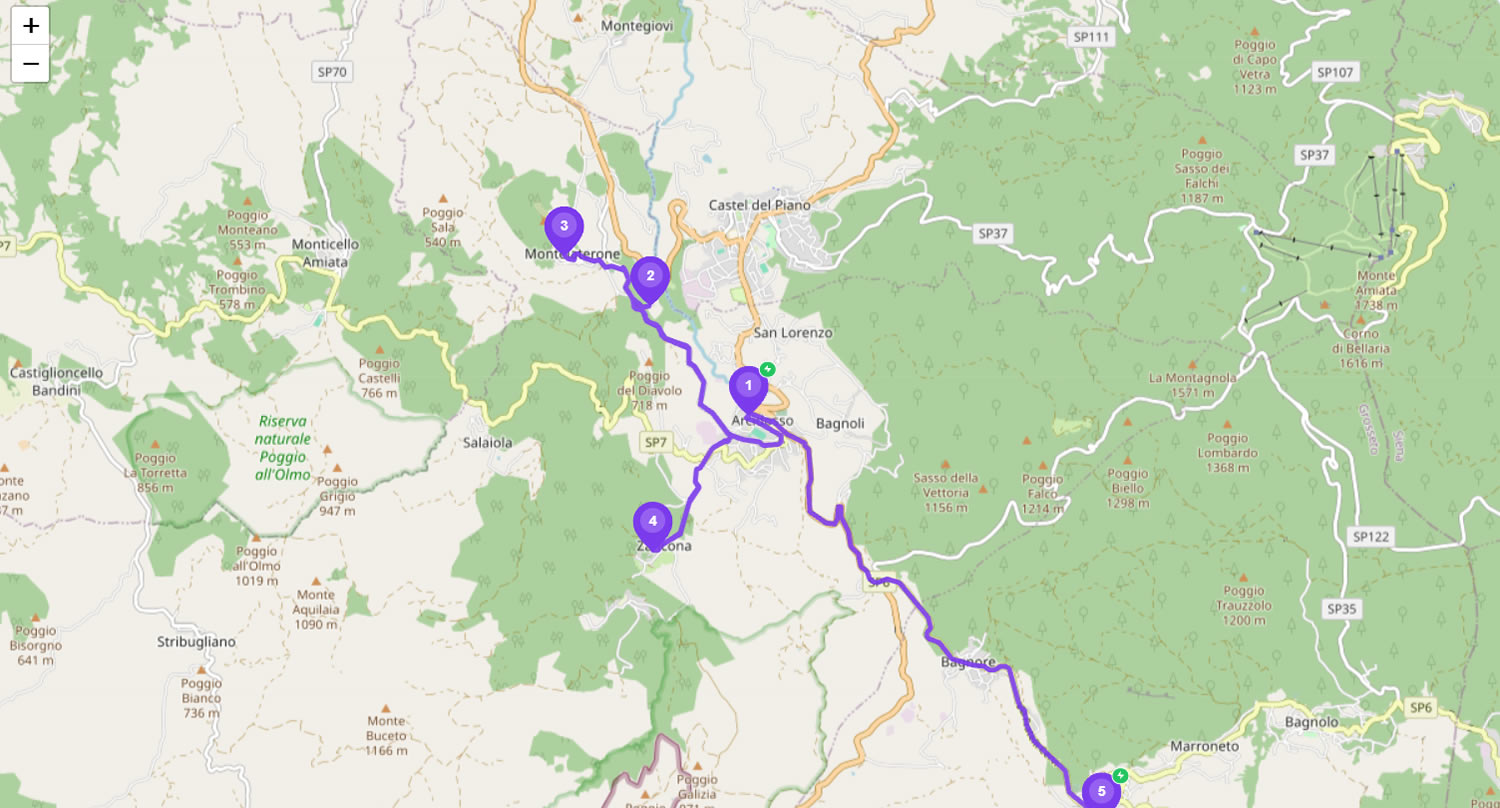
This itinerary explores the most mystical and identity-defining side of Mount Amiata, where the natural dimension of the mountain intertwines with one of the most singular religious and social experiences of nineteenth-century Italy. It begins in Santa Fiora, gradually leaving the village behind to enter a dense woodland landscape shaped by silence, shade, and roads that gently invite you to slow down.
💧 Santa Fiora: water and identity
Departing from Santa Fiora immediately introduces the core theme of the route. The Peschiera, with its crystal-clear spring waters flowing into the heart of the village, is not only a natural resource but a deeply rooted symbol of local identity. Water, central to the town’s history, becomes the starting point of an itinerary where landscape and spirituality constantly intertwine.
🏰 Arcidosso: fortress, power and mysticism
The road then reaches Arcidosso, dominated by its imposing Aldobrandeschi fortress. Built between the 11th and 12th centuries, the Castle of Arcidosso represents one of the most significant defensive strongholds of the Amiata area and offers a clear understanding of the strategic visual control over the surrounding valleys.
Within the village, the story of David Lazzaretti is explored through the study center dedicated to him. Here mysticism takes on a collective and political dimension: the mountain becomes the setting for one of the most distinctive religious movements of nineteenth-century Italy.
⛪ Pieve ad Lamulas: Romanesque in silence
Continuing onward, you reach the Pieve ad Lamulas, one of the most refined Romanesque rural churches in the Amiata region. Isolated in a clearing, built in local stone and defined by essential architectural forms, the church reflects the medieval religious organization of rural communities. It is a place that preserves a strong sense of intimacy and contemplation.
🏘️ Montelaterone: the ancient village
The route then leads to Montelaterone, a small medieval settlement perched on the slope, preserving its compact structure and Romanesque church. Here the relationship between community, altitude and isolation is clearly perceptible: a settlement designed to endure rather than expand.
🌿 Zancona: rural spirituality
The itinerary finally touches Zancona, a small mountain hamlet connected to the Giurisdavidic movement. Here spirituality does not manifest in grand architecture, but in the everyday life of the rural community that supported Lazzaretti’s vision, offering a more intimate and anthropological understanding of the territory.
Why choose it
A short yet layered route, ideal for those who wish to understand Amiata as an inhabited and spiritual mountain, where medieval fortresses, isolated parish churches and nineteenth-century religious movements narrate centuries of inner quest and social organization. Perfect for those seeking a compact, fully paved itinerary that brings together landscape, architecture and local identity without demanding detours.